The OER Basics page provides you with a well-founded overview of Open Educational Resources.
This page guides you through the key aspects: What OER are, which legal principles apply in German copyright law and how Creative Commons licenses work. A detailed overview of all CC license types rounds off the offer.
With this knowledge, you can use OER competently in your teaching. If you have any further questions, please use our FAQs, contact the support or visit our weekly online consultation hour - the twillo-Thursday.
Zur nächsten Sektion scrollen
An Introduction to OER
Open Educational Resources (OER) are educational materials of any kind and in any medium that are freely accessible and may be used, redistributed and, as a rule, edited free of charge. The key feature is open licensing, which allows third parties to use the materials. The choice of license and thus the decision as to which use of a work is permitted lies solely with its author (see German Commission for UNESCO).
Open licenses are in the context of German copyright law. Before you can dedicate yourself to the use and creation of OER, you first need to have a basic knowledge of this.
German Copyright Law
Copyright law encompasses all legal regulations that deal with the protection and exploitation of intellectual property. Whenever you create a work that meets the requirements of copyright law it is automatically protected by copyright.
As the author, you generally own the rights to the content you have created (exceptions: transfer of rights to third parties, e.g. a publisher or university), so only you may decide how your work is used, distributed and commercially exploited (see VFR 2022).
In principle, any use of works without the author's permission is prohibited.
Requirements of copyright law
Copyright law only protects personal intellectual creations (Section 2 (2) UrhG). A work falls within the scope of protection of the Copyright Act if it represents a specific intellectual creation (e.g. a text, a piece of music) and has a certain level of creativity.
A work is deemed to be creative if it stands out from the everyday, already familiar. The threshold is very low: even the so-called “small coin” (for example, a simple melody or drawing) is eligible for protection.
Limitation provisions of copyright law
Public domain works and official works are exempt from copyright protection for the benefit of the general public. These works may be used without restriction. A work is in the public domain if the author has been deceased for at least 70 years. Works that do not reach the level of creation are also in the public domain. Official works include legal texts, ordinances and judgments.
In addition, the so-called “statutory licenses” allow the use of third-party works without consent. The right to quote is particularly relevant in the university context, § 51 UrhG and the relatively new regulation in § 60a UrhG for the area of science and teaching.
§ Section 51 UrhG permits the citation of protected works, provided that the so-called purpose of the citation is fulfilled. This is the case if the quoted content supports the author's own statements. In addition, there must be a substantive discussion of the quoted content and a source must be cited.
§ Section 60a UrhG permits a limited use (up to 15 percent) of protected works in restricted public areas (e.g. as part of a non-public course at the university).
Tip: In the handout Urheberrechts-FAQ Hochschullehre (Förster 2018) you will find all the important information on questions of citation law and § Section 60a UrhG in the university context.
Open Licenses: Creative Commons
Open licenses are within the scope of applicable copyright law. If authors mark their works with an open license, they grant third parties certain rights of use.
In the educational context Creative Commons licenses have become established. These are standardized license agreements that have been reviewed by German lawyers and are considered legally secure.
Creative Commons licenses are free of charge, relatively easy to use and flexible: By choosing a CC license, authors can decide in a differentiated manner which rights they want to grant third parties to their content and under which conditions and/or with which restrictions their works may be used.
CC Licenses at a Glance
| License | Materials May... | Condition | License Text |
|---|---|---|---|

|
...be used freely without conditions or attribution | 0 - Zero: No conditions | CC0 1.0 |
|
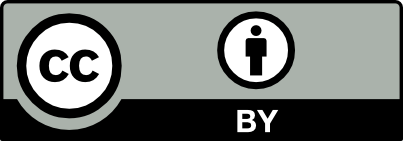
...be shared, adapted, and used commercially with attribution | BY - Attribution: Credit must be given to the creator(s) | CC BY 4.0 |

|
...be shared, adapted, and used commercially with attribution and under the same license | BY-SA - Attribution + ShareAlike: Credit must be given to the creator(s) + redistribution under the same terms | CC BY-SA 4.0 |
|
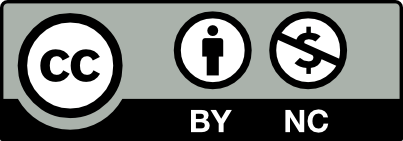
...be shared and adapted for non-commercial purposes with attribution | BY-NC - Attribution + NonCommercial: Credit must be given to the creator(s) + no commercial use allowed | CC BY-NC 4.0 |
|
...be shared and adapted for non-commercial purposes with attribution and under the same license | BY-NC-SA - Attribution + NonCommercial + ShareAlike: Credit must be given to the creator(s) + no commercial use allowed + redistribution under the same terms | CC BY-NC-SA 4.0 |
|
...be shared unchanged with attribution | BY-ND - Attribution + NoDerivatives: Credit must be given to the creator(s) + no modifications allowed | CC BY-ND 4.0 |
|
...be shared unchanged for non-commercial purposes with attribution | BY-NC-ND - Attribution + NonCommercial + NoDerivatives: Credit must be given to the creator(s) + no commercial use allowed + no modifications allowed | CC BY-NC-ND 4.0 |
Table of CC licensing options by Ruhr-Uni-Bochum, eScouts OER, Christine Rutenfranz, edited by twillo (color adjustment and content additions), licensed under CC BY-SA 4.0.
Live. Online. No registration required
twillo-Thursday